


When the lower back hurts, one's life becomes miserable because of the immense discomfort it causes.Meanwhile, there is no person whose pain in the lumbar region is not a symptom that has appeared at least once in his life.Pain in the lower back can occur for different reasons and in different ways.In its manifestations, the pain is sudden and increasing, shooting and aching.However, there is a common feature - if left untreated, it will get worse.
Causes of back pain in the lumbar region
The human spine is exposed to stress of varying intensity every day, from minor to significant.At the same time, he does not always manage to compensate for the loads and distribute them to the surrounding tissues without harming himself, as a result of which he receives microtraumas.It should be noted that the lumbosacral spine is often subject to overload.In addition, there are a number of other reasons why the lower back can hurt.This includes infection, genetics, organ damage, and more.
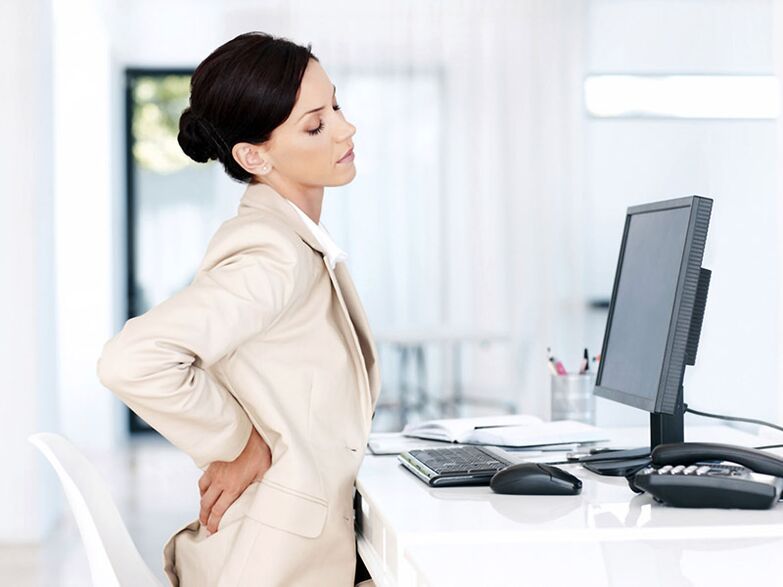
Why does the lower back hurt (female causes):
- Inflammatory diseases manifest as pain in the lower back or give complications that lead to this symptom:
- Vulvitis - inflammation of the external genital organs;
- Colpitis - inflammation of the vaginal mucosa;
- adnexitis - inflammation of the uterine appendages;
- During pregnancy, the load on the spine in general and on the lower back in particular is particularly increased.As a rule, the lower back stops hurting after childbirth.It should also be noted that during pregnancy there may be an impetus for the development of mature disease;
- abortion.The procedure damages the internal membranes, leading to local inflammation.In addition, abortion is accompanied by serious psychological stress;
- Pain during menstruation or in scientific language algodismenorrhoea.The menstrual cycle is a process that is associated with hormonal changes in the body.It is also accompanied by rejection of the endometrial layer (the lining of the uterus), which causes blood loss and leads to intense contractions of the uterus to remove the "garbage".This can cause stomach and lower back pain;
- Climax.Problems with the hormonal balance in the body can lead to poor blood circulation to the organs in the pelvic area.Because of this, bone density decreases and osteoporosis develops;
- Suspicion.Although this quality is common to both sexes, in the majority of cases it is characteristic of women;
- Large breast size;
- High heels and carrying a heavy bag can also cause lower back pain.
Why does the lower back hurt (male causes):
- prostatitis.Inflammation of the prostate gland sometimes provokes pain in the lumbar region;
- Epididymitis.Inflammation of the epididymis can be reflected by discomfort in the lower back;
- Men aged 50 and over are at increased risk of genital cancer.What could be the cause of lower back pain?
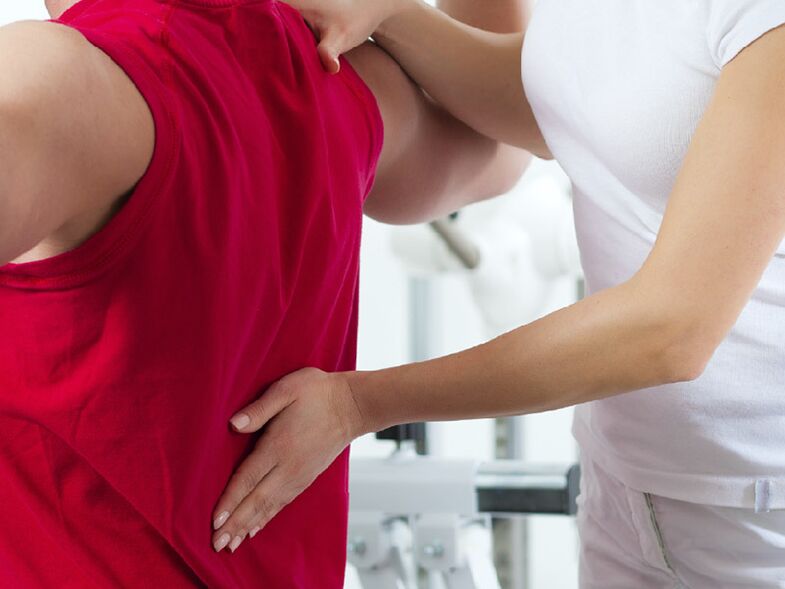
Why does the lower back hurt (common causes):
Pain in the lower back can occur due to many pathologies of the musculoskeletal system.However, in addition to diseases affecting the spine (spondyloarthrosis, osteochondrosis, osteoporosis, osteomyelitis ...) and injuries, there are many causes:
- Abnormalities or defects of the skeleton: kyphosis, scoliosis, lordosis, spina bifida, wedge-shaped vertebrae, etc.It should be noted that in ≈50% of cases the reasons for the development of the defect are unknown, in ≈10% - environmental influence, in ≈19% - genetics, in the rest - multiple factors.In most cases there is no treatment, sometimes surgical correction is permissible;
- Appendicitis.Inflammation of the vermiform appendix of the cecum (appendix) causes sudden, sharp pain in the abdomen, which may radiate to the lumbar region;
- Cholecystitis.Pain in the lower back can be due to inflammation of the gallbladder;
- Acute pancreatitis.Inflammation of the pancreas, which is characterized by pain in the waist;
- cystitis.Bladder inflammation causes discomfort in the pelvic area;
- Diseases of the small intestine, due to their proximity to the nerve fibers of the lumbosacral region, can cause pain in this region.Enteritis (gastroenteritis, enterocolitis, gastroenterocolitis), intestinal enzymopathies, diverticulosis;
- Kidneys.Pain in the lower back often accompanies diseases of these organs.Pyelonephritis, kidney prolapse, kidney failure, urolithiasis, amyloidosis, lupus nephritis, etc.;
- Extra pounds increase the load on the spine and lead to its gradual destruction;
- Tuberculous tissue damage;
- Ankylosing spondylitis;
- Inflammation of the muscles of the lower back as a result of a viral or bacterial infection;
- Malignant tumors developing or metastasizing in the lower back;
- Benign formations that grow on nerve fibers or press them;
- Spinal epidural abscess.Purulent inflammation of the spinal space;
- Abdominal or pelvic adhesions after surgery.This is the proliferation of connective tissue during the healing process of postoperative wounds.For example, adhesions of the intestines to organs or the abdominal wall after laparotomy;
- Hypothermia, stress, poor nutrition, injury;
- Due to other diseases.
"Improper posture is the main reason why a child can have lower back pain."
Types of back pain in the lumbar region
Pain is a mental and physiological reaction of the body to strong irritation of nerve nodes in organs and tissues.Pain is the most common reason for patients to go to the hospital, and it is also usually the first sign and warning sign of the disease.Pain is a signal of damage that helps to trigger protective (for example, muscle spasm to limit the mobility of the affected part of the body when a nerve is pinched) and compensatory mechanisms of the body (for example, fibrosis in the last stage of osteochondrosis).There are many different classifications of pain.
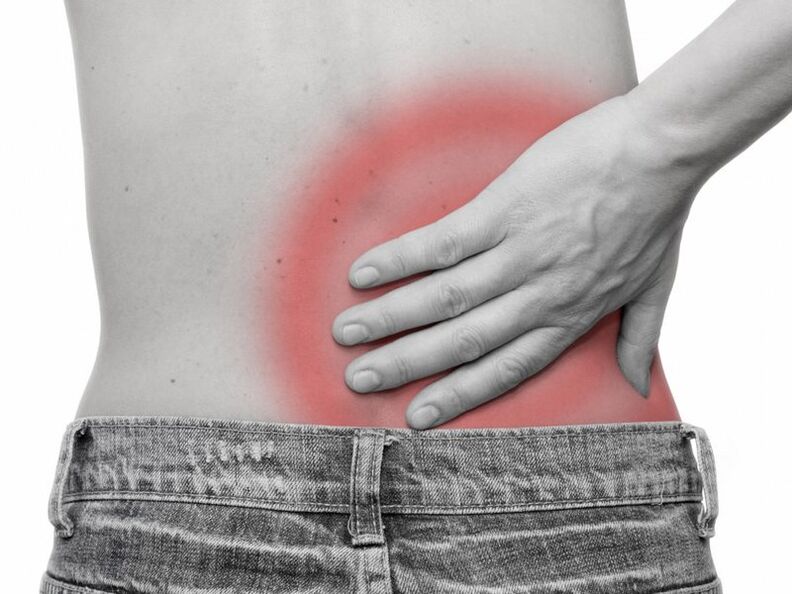
Based on the location of the sensation, we can divide the reasons why the lower back hurts so much into 2 types: primary and secondary (reflected, projected).In the first case, pain is caused by damage to the musculoskeletal system as a result of degenerative changes (for example, osteochondrosis) or trauma.In the second case, it is due to a pathology (for example, cholecystitis radiating to the lower back) that is not directly related to the spine and the muscles of the lumbar region, so it can be very diverse.
The nature of the pain is constant (otherwise chronic) and intermittent (otherwise acute).The first type is associated with irreversible processes of circulatory disorders, nerve damage or damage to the musculoskeletal system.As a rule, eliminating the source of persistent pain is difficult or impossible.The second type includes acute diseases of the organs, injuries and individual physiological characteristics of the body.Periodic pain disappears after removing the cause.
Referred pain is when the sensations do not match the true source of pain (the original source, the site of injury).For example, pain radiating to the leg when the nerve roots are compressed in the lumbosacral spine is called projected.And after damage to the internal organs, pain occurs, called reference pain, which is localized in a certain dermatome in accordance with Zacharyin-Ged zones.
According to the localization, the pain can be somatic superficial (damage to the skin), somatic deep (disorders of the musculoskeletal system and tissues), visceral (damage to the internal organs).
Depending on the nerves involved, the pain can be neuropathic when peripheral nerves are damaged or central when the central nervous system is damaged.
Diseases characterized by chronic low back pain
Here they are:
- Intervertebral osteochondrosis of the lumbosacral spine is one of the most common causes of pain in the lower back.It is a complex disease consisting of inflammation and tissue destruction, compression of nerves and blood vessels.There are extensive symptoms;
- Lumbago.Shooting pain in lower back.In most cases, it is the result of osteochondrosis and its complication - disc herniation.Therefore, the treatment is similar;
- osteoporosis.A chronic progressive metabolic disease of the bones, in which their density decreases and fragility increases.In other words, thinning of the bones.It is the leading cause of hip fractures in the elderly.The disease deforms the skeleton, joints and cartilage.Characteristic of women during menopause.Osteoporosis risk assessment: Anyone who has ever broken a bone (eg, vertebra, hip) with minor force should be assessed;
- Scoliosis.Distortion of the spine, which leads to asymmetry of the shoulders, poor posture, impaired motor function of the skeleton, protruding ribs on the left or right;
- Rheumatoid arthritis.Women are more susceptible to the disease.It most often develops during menopause.It is a systemic chronic disease involving the muscles, ligaments and cartilage in the degenerative-dystrophic process.The causes of the disease are autoimmune processes;
- Ankylosing spondylitis or ankylosing spondylitis.Disease with progressive loss of joint mobility.More often in men.It is a chronic inflammation of the joints leading to fibrosis - ie.connective tissue growth.Localized mainly in the spine.Accompanied by pain, damage to the eyes and reduced growth.It leads to a complete loss of mobility of the joint;
- spondylosis.A chronic disease of the spine, which is manifested by changes in the fibrous tissue of the intervertebral space and the formation of spinal bone growths (spondylophytes or osteophytes) on the sides of the vertebrae.More often a result of advanced age;
- Phlebothrombosis.Partial or complete blockage of the deep veins of the leg due to blood clots.It develops with a simultaneous combination of 3 factors: pathology of the walls of blood vessels, thickening and slowing of blood flow.Prolonged wearing of high heels increases the risk of developing pathology.Phlebothrombosis is extremely dangerous, as it is practically asymptomatic until a serious stage;
- thrombophlebitis.Partial or complete cessation of blood circulation in superficial veins due to the formation of blood clots caused by pathological changes in the vein as a result of its inflammation.Most often, the disease is a consequence of varicose veins.Phlebothrombosis can be a further development of this disease;
- atherosclerosis.Slowing or stopping blood flow in the vessel due to cholesterol plaques.The disease is typical of adult men;
- Osteomyelitis.Purulent-necrotic process in bones, bone marrow and surrounding tissues.The cause is a bacterial infection.The patient's condition worsened over several days.Requires immediate treatment;
- Different leg lengths.More than 3 cm. The disease develops due to atrophy of the muscles of one of the legs.
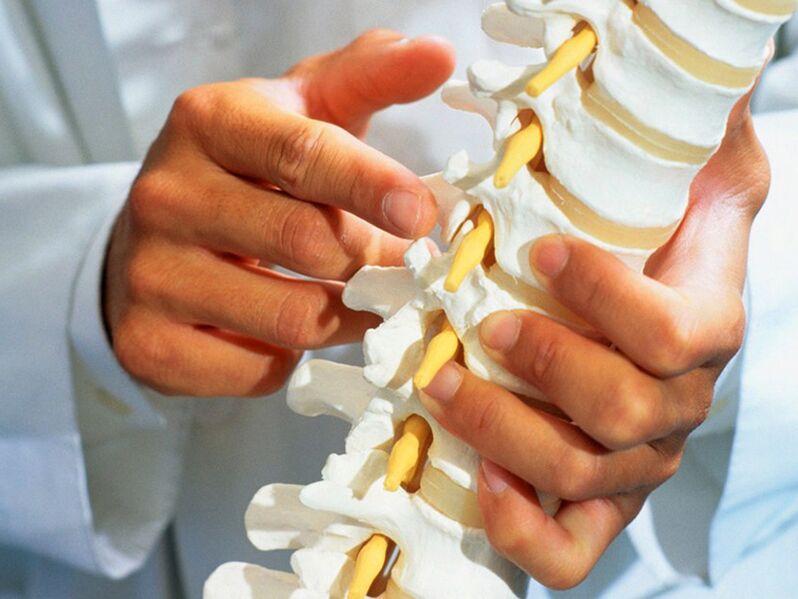
These diseases and many others are the reason why the lower back hurts constantly.All of them require urgent and serious treatment.However, it is often symptomatic and aims to delay the further development of the disease.
What to do if your back hurts
"If your lower back hurts periodically, this is a signal that should be taken seriously and undergo an urgent examination.
In case of sudden pain, the cause of which is unclear, the body temperature should be measured and the symptoms should be noted.Such as vomiting, diarrhea, sticking to the tongue, nature and localization of pain, etc.Lie on a firm bed or carpet, placing thick pillows under your knees, head and torso.If the pain does not subside for a long time, call a doctor.And in any case, it is necessary to undergo an examination.
For the case when the cause of the pain is known.For example, with a bruise or sprain of the lower back, first aid is provided with non-steroidal anti-inflammatory drugs (tablets or better ointments).You can take a diuretic once to reduce swelling and wrap the lower back with an orthopedic belt or towel to limit mobility.
Exercises that can help relieve pain:
- Relaxation.Lie down on the carpet.Place a thick pillow under your torso and head, and a low stool or bedside table under your knees.Relax completely.This will help the body to take the most natural position for the spine;
- Smooth stretching of the lumbosacral region.Gently and carefully lie face down on the table, resting your hands on it to bend with minimal back strain.You can also tighten your abdominal muscles.Position yourself so that your pelvis is at the very edge of the table.In other words, approach the table until your hips touch it and lie down.Completely relax the muscles of the back, buttocks and legs.Half of the body hangs from the table in a relaxed state.In this state, take a deep diaphragmatic (abdominal) breath and hold your breath for 3-5 seconds, then exhale slowly.Take 7-10 breaths like this.Then gently stand up, using your arms and abs, with minimal tension in your lower back.You can repeat the exercise several times;
- Unloading the lumbosacral area.Get on all fours.Hands are shoulder-width apart and perpendicular to them.Feet wider than shoulders.The back should remain in a natural position without arching or arching.In this position, take a deep diaphragmatic breath and then exhale as much as possible, imagining how the navel extends towards the spine.At the end of exhalation, hold for 2-3 seconds, while tightening the muscles of the buttocks and thighs, but not the lower back!Then relax.Do 7-10 such breaths and 2-3 series of exercises;
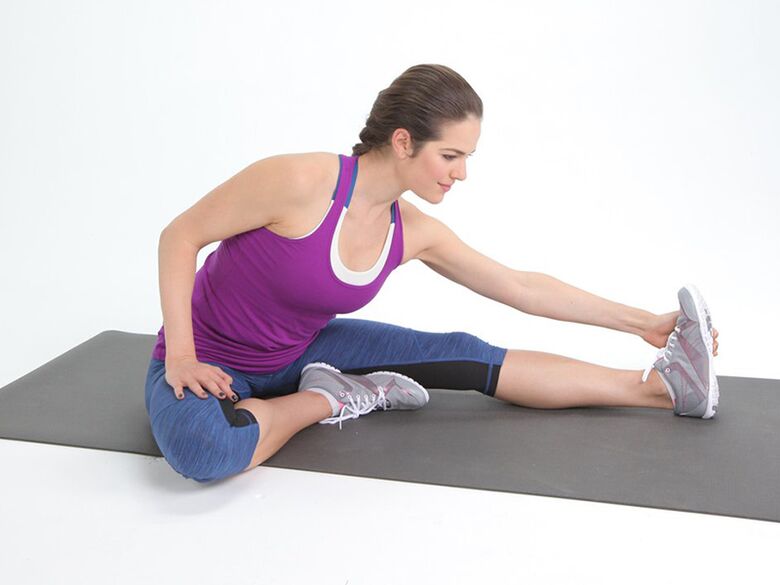
What not to do if your lower back hurts:
- Warm up.This can increase inflammation and worsen the situation;
- Take painkillers without an established diagnosis.Pain is a defense mechanism of the body.There may be no pain, but this does not mean that the degenerative changes have stopped;
- Place bones yourself or even with a chiropractor without an examination and diagnosis.Regular adjustments of the vertebrae will further damage the spine.Vertebral displacement does not always occur as a result of injury.In the case, for example, of advanced osteochondrosis.
"You have to treat the underlying disease first and then its symptoms."
Determining the cause of such a common symptom as pain in the lower back may require a thorough examination and consultation with various medical specialists: neurologist, vertebrologist, gynecologist, etc.If it is not clear which specialist to go to, you can consult a therapist.The most common review procedures are as follows:
- Examination of patients' complaints, examination of joint mobility, assessment of the degree of degenerative changes;
- General analysis of urine and blood;
- Biochemical blood test;
- X-ray examination of the lumbar vertebrae;
- Ultrasound of the heart and abdominal organs;
- doppler echography - examination of blood vessels;
- CT or MRI.
Treatment of lower back pain
Treatment depends on the diagnosis, as there is no single drug for every disease.This article lists only a few common names of drugs that are often used in the treatment of low back pain.However, it is strongly recommended not to self-medicate and take any medication only after consulting a doctor.

Drug treatment of low back pain is aimed at relieving inflammation and relieving pain.And for this purpose, the following types of drugs are used:
- Nonsteroidal anti-inflammatory drugs;
- Muscle relaxants;
- Narcotic analgesics;
- corticosteroids;
- blockades;
- Minerals and vitamins.
Some of the best pain relievers are ointments, creams, and gels:
- NSAIDs;
- Ointments containing diclofenac;
- Combined medicines;
- Anti-inflammatory ointments;
- Healing patches.
Symptomatic therapy is used only for incurable diseases.Modern medicine applies a complex approach to the treatment of lower back pain.Vitamins B1, B6, B12 are added to NSAIDs.The use of high therapeutic doses of B vitamins has been shown to enhance the effect of NSAIDs due to the improvement of nerve tissue repair.Thus, the optimal addition to NSAIDs is a combined vitamin drug.Therefore, for the most effective pain control, treatment with this drug begins with daily injections for 7-10 days.Physiotherapy procedures, exercise therapy, massage, etc. are added to this.This is how the most effective and long-term treatment is achieved.
Prevention
Prevention of lower back pain is as follows:
- Regular physical activity, keeping the body in good shape, developing the muscular frame.If it is not possible to do sports, then 15-minute therapeutic exercises 2-3 times a day will help not to get sick;
- Watch your posture;
- Less stress, more fruits and vegetables.Strong immunity protects you from many diseases;
- A proper balanced diet containing essential minerals and vitamins;
- An annual preventive examination by a doctor is the best prevention for detecting diseases at an early stage;
- Maintains water-salt balance.The human body needs 1.5 to 4 liters of water per day, depending on body weight, weather and activity.